
From automation to intelligence: The new era of enterprise chatbots
Discover how AI chatbots transform customer service with 24/7 availability, real-world results, key challenges, and what it takes to succeed.
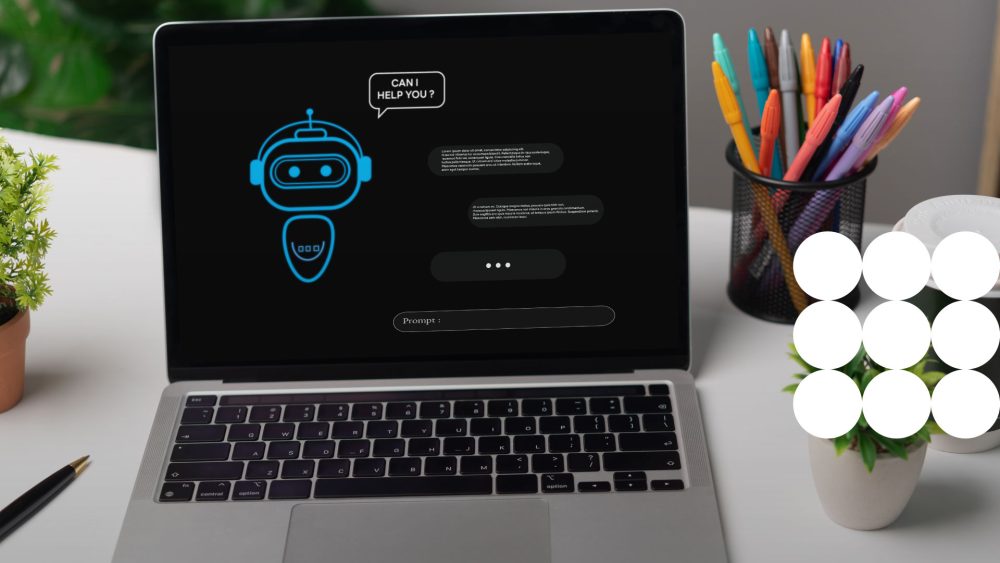
Picture this: you call your bank at midnight and get your issue resolved in under two minutes. Or you message a company about a product and immediately get personalized recommendations based on your history—no holding, no “press 2 for the main menu,” no frustration. For millions of customers worldwide, this isn’t wishful thinking. It’s everyday reality, powered by AI chatbots.
What looks effortless on the surface represents a fundamental shift in how businesses interact with customers. Three-quarters of companies plan to implement this technology within the next three years, yet 40% hit the same roadblock: they simply don’t know where to start.
From phone trees to real conversations
Not long ago, chatbots were more trouble than they were worth. You’d get canned responses, navigate through rigid menus, and constantly feel like you were talking to a machine that just didn’t get it. Those early bots demanded exact phrasing—say the wrong word and you’d end up in a loop with no way out.
Then generative AI changed the game completely. Modern virtual assistants grasp context and nuance. They remember what you said three messages ago. They learn from every conversation and often figure out what you need before you finish asking. This isn’t science fiction—it’s Natural Language Processing doing its thing in real time.
The impact is concrete and measurable:
- 24/7 availability: Customers get help any time of day without you staffing night shifts
- Instant responses: No more hold music or queue positions
- Meet customers anywhere: Whether they prefer WhatsApp, Facebook Messenger, your website, or SMS, your bot is there
- Handle massive volume: Thousands of conversations happening simultaneously without missing a beat
- Focus your team on what matters: Let humans tackle the complex, high-touch issues that actually need creativity and judgment
WORTH NOTING: Research shows 65% of consumers now prefer chatbots for quick answers because they’re faster and more accurate. In some markets, WhatsApp bot interactions have overtaken traditional phone calls by more than 50%.
Real results, not just hype
Plenty of technology sounds great on paper. But what happens when rubber meets road?
Take a travel agency that deployed chatbots across their customer service channels. The bots now handle 65% of all incoming questions autonomously—everything from flight status to basic booking modifications. Meanwhile, their human agents focus entirely on complex itineraries and high-value customers. The result? They’re delivering 24/7 support without hiring more staff, and customers love getting immediate answers at 2 AM when inspiration strikes.
Or consider a restaurant chain wrestling with brutal employee turnover. Instead of throwing money at recruiting, they got creative. They used AI to gather customer feedback through ultra-short three-question surveys, then fed those insights directly into staff training. Customer survey participation jumped from 8% to over 45%, and—here’s the kicker—employee turnover dropped by a fifth over three years.
The most eye-opening example? An e-commerce platform using AI to predict what products will sell and dynamically reorganize warehouse inventory. By putting the right items in the right places at the right time, they enabled same-day and next-day delivery across their network. Six months after implementation, revenue climbed 24%.
Even municipal governments are getting in on this. Citizens in progressive cities can now pay parking tickets, property taxes, and utility bills through WhatsApp. No more taking time off work to stand in line at City Hall. The efficiency gains are staggering, and residents actually appreciate their local government for once.
The hard truths nobody mentions

Here’s what the sales pitches often gloss over: AI chatbots come with serious challenges you need to understand upfront.
The biggest risk? What developers call “hallucinations”—when AI confidently states something completely wrong. This happens because language models predict the most statistically likely next word based on patterns in their training data. They don’t actually understand truth or facts the way humans do. When your chatbot tells a customer something false, you’re not just dealing with a mistake—you’re potentially torching the trust you’ve spent years building.
The fix isn’t simple, but it’s doable. You need verified training data, multiple layers of validation, and carefully designed boundaries (the technical term is “guardrails”) that keep your bot from wandering into dangerous territory. This is the difference between a bot that genuinely helps and one that becomes a liability.
Here’s where companies split into winners and losers. Many organizations are now dedicating 10-20% of their marketing budgets to AI. The ones succeeding? They partner with specialized providers who guide them through design, implementation, and ongoing optimization. The ones struggling? They try to DIY it without the right expertise, then wonder why it’s not working.
Why observability changes everything

Here’s the part that separates companies who get this right from those who don’t: deploying a chatbot is just the beginning. What really matters is your ability to see, understand, and continuously improve what’s happening under the hood.
Imagine having a real-time dashboard showing exactly how your chatbot performs, where network issues crop up, which questions trip up users, and what processes waste resources. That’s end-to-end observability—complete visibility across your entire digital ecosystem, from network infrastructure through to the customer’s actual experience.
Ikusi Intelligence makes this tangible. It’s a unified portal giving you a comprehensive view of service continuity across networks, security systems, IT infrastructure, and automation—all in one place, designed for optimal Customer Experience. But it goes beyond monitoring. You can spot anomalies before customers feel the impact, understand hidden dependencies between systems, and make decisions based on hard data instead of gut feelings.
This combination—deep observability paired with smart AI implementation—is what separates organizations that deploy chatbots and cross their fingers from those that genuinely transform customer experience while driving sustainable value.
The next step
Remember that customer calling at midnight who gets their problem solved in two minutes? That doesn’t happen by luck. It’s the result of intelligent technology, solid infrastructure, continuous monitoring, and a team that knows how to make all the pieces work together.
Success comes down to making the right choices from day one. With a clear strategy, observability tools that give you full control, and an experienced partner guiding you through the process, your organization can deliver outstanding experiences while optimizing costs and staying ahead of the curve.
Ready to move forward? Discover how Ikusi Intelligence and Ikusi CX Portal can help you deploy AI solutions with complete observability, 24/7 monitoring, and expert support at every stage.
Send us your information and we will contact you.