
Strategic Anticipation of 6G Starts with Private 5G Networks
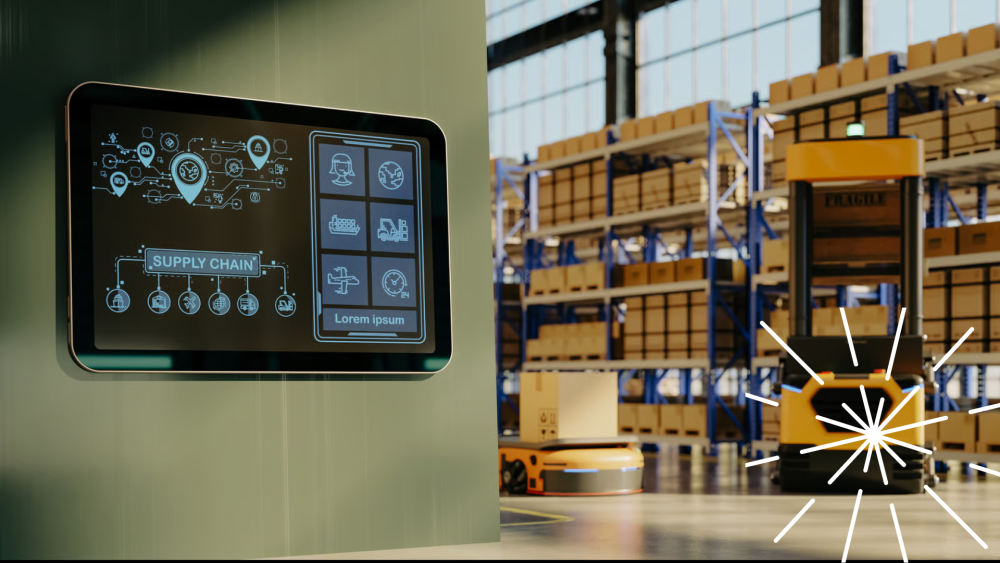
Quick Answer: Waiting for 6G to mature is not a competitive strategy — it’s a costly delay. At Ikusi, we help mid-market manufacturing and logistics companies deploy Private 5G Networks today, combining industrial IoT and Edge Computing to cut latency, secure operational technology, and build a virtualized architecture that makes the eventual leap to 6G a natural evolution rather than a forced migration.
The pressure to digitize manufacturing plants and logistics centers across Latin America raises a common question in technology planning: as research into 6G advances, should CTOs and CISOs wait for the next generation to mature, or implement current standards now?
While the industry debates the next wireless generation, GSMA Intelligence projects that Latin America will reach 50% of its connections on 5G by 2030 — a significant leap from current levels, driven primarily by enterprise use cases in manufacturing, mining, energy, and logistics.
In such a competitive environment, connectivity is the operational and collaborative foundation on which the future of the business is built. The real value isn’t in waiting for the next generation — it’s in how well the current one is implemented. Deploying Private 5G Network services today is how mid-market companies can secure their competitiveness across the region.
The Industrial IoT Ecosystem and the Maturity of Private Connectivity
Private 5G networks and edge computing now form the base infrastructure for advanced automation. By deploying a dedicated, exclusive communications environment for critical plant processes, organizations gain three immediate operational advantages:
- Ultra-reliable connectivity: maintains synchronous control of autonomous guided vehicles (AGVs) and robotic arms in dynamic logistics warehouses, eliminating the signal drops common to traditional Wi-Fi.
- Massive device density: supports the integration of up to one million industrial IoT sensors per square kilometer, enabling real-time data collection on machinery performance.
- Edge processing: using edge computing to process information directly on-site, cutting response times to milliseconds for automated safety shutdowns.
These networks are designed to resolve plant-level bottlenecks, integrating observability tools to monitor infrastructure health end-to-end and protect business continuity.

Evolving Toward 6G and Operational Resilience
Standardization of 6G — formally known as IMT-2030 — is advancing through stages defined by the ITU-R: the technical vision was finalized in 2023, requirements and evaluation methodologies are being defined during 2026, and final specifications, developed in parallel by 3GPP, are expected by 2030, when the first commercial adoption is also projected. In operational terms, this means no organization should stall its infrastructure decisions waiting for a technology that is still in the definition phase.
6G promises exceptional transfer speeds and microsecond latencies to enable niche scenarios such as precise digital twins. However, it isn’t conceived as a direct replacement, but rather as a higher layer of technical evolution.
For an organization to adopt these capabilities in the future, its current architecture must be fully virtualized. Remaining on rigid, legacy infrastructure built solely on industrial cabling will widen the technology gap, making the future transition far more costly. Today’s private connectivity is the mandatory foundation for preserving operational flexibility.
This wireless evolution also requires protecting the convergence between plant-level operational technology (OT) and information technology (IT). Through 5G’s native capabilities, CISOs can implement network slicing techniques, creating isolated virtual channels for critical production traffic. This ensures that a vulnerability in a peripheral device cannot compromise the stability of the core automation system.
Leading the Industrial Present
Standing by and waiting for the arrival of a new wireless generation means ceding years of efficiency, cost optimization, and responsiveness to competitors who are already connecting their assets intelligently. In sectors such as manufacturing and logistics — where, in countries like Brazil and Chile, private 5G networks are already operating in factories, ports, and distribution centers — technology lag isn’t a future risk; it’s a present competitive disadvantage.
The path to the factory of the future is built with technologies available and proven today. At Ikusi, through our Private 5G Networks services, we help mid-market companies virtualize their network architecture now, so that the leap to 6G in the coming decade becomes a natural evolution rather than a forced migration.
References (APA 7)
GSMA Intelligence. (2026). Latinoamérica y el avance del 5G: promesa real, adopción desigual. TheStandardCIO. https://thestandardcio.com/2026/03/02/latinoamerica-y-el-avance-del-5g-promesa-real-adopcion-desigual/
TeleSemana. (2025). Redes privadas 2025. https://www.telesemana.com/redes-privadas-2025/
MobileTime. (2026, April 29). México acelera flexibilización del espectro para redes privadas. https://mobiletime.la/noticias/29/04/2026/redes-privadas-industriales-5g/
Send us your information and we will contact you.