
Application performance monitoring: When digital continuity IS the business
Learn how APM catches problems before they hurt your business. Get real-time visibility into mission-critical enterprise applications.

Picture this: It’s 9:00 AM on a Monday morning. Your sales team needs to access the CRM to close pending deals, but the application is crawling. By 9:45 AM, support tickets start flooding in. At 10:30 AM, you realize the issue started at 6:00 AM. The damage is done.
Enterprise applications aren’t just tools anymore—they’re the backbone of your business. Every transaction, every critical process, every customer interaction depends on these applications running smoothly. We all know no system is bulletproof, but when failures slip through undetected, the impact on operations can be catastrophic.
The silent failure problem
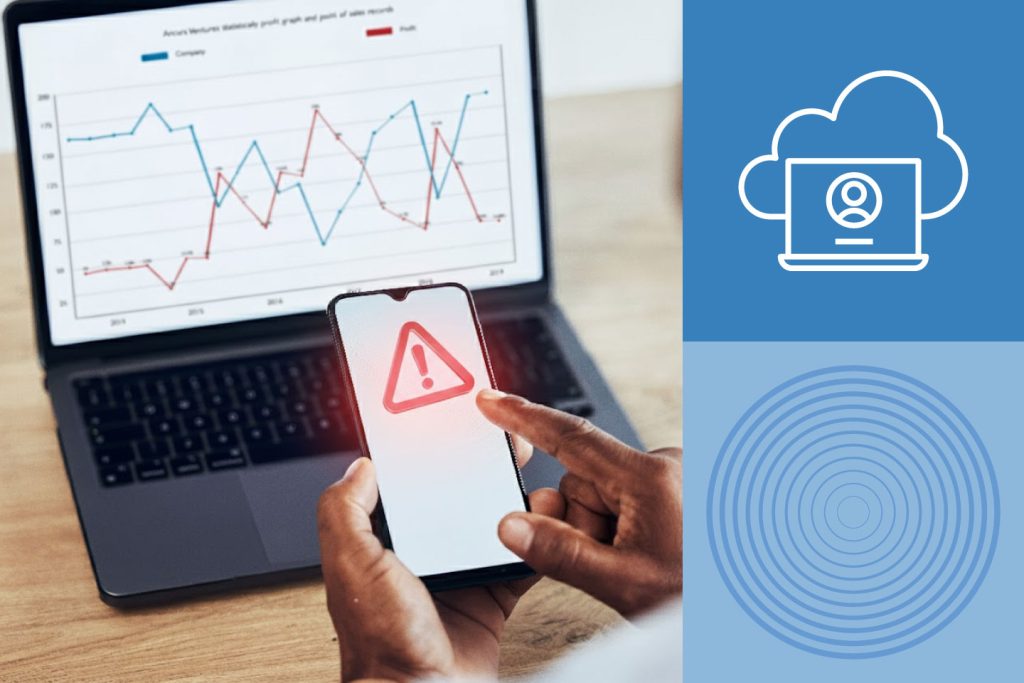
Today’s organizations run distributed, asynchronous applications spanning cloud, hybrid, and on-premise environments. This complexity turns troubleshooting into finding a needle in a haystack. Is it the database? An overloaded microservice? A network choke point?
When you’re flying blind, the costs add up fast:
- Downtime goes unnoticed, killing productivity before anyone realizes there’s a problem
- User experience degrades, eroding customer trust without a single formal complaint
- Teams scramble in crisis mode, burning hours on reactive troubleshooting
- You’re making critical infrastructure and code decisions based on guesswork
Bottom line: Organizations using APM cut performance incidents, speed up problem resolution, and boost stability with AI-powered root cause analysis that ties technical performance directly to business impact.
– Dynatrace
Complete visibility, proactive decisions
Application Performance Monitoring (APM) isn’t just about watching basic metrics. It’s a complete observability system that captures, correlates, and analyzes real-time data across your entire infrastructure stack—transactions, services, databases, networks, and end-user behavior.
In cloud-native environments where applications pump out massive telemetry from microservices spinning up and down on demand, modern APM uses AI to cut through the noise. These systems process billions of dependencies in real time, automatically baseline performance, and catch anomalies before they escalate into full-blown incidents.
What sets modern APM apart?
- Distributed tracing tracks every transaction’s path through your entire stack
- AI-powered root cause analysis pinpoints exactly where performance tanks
- Service dependency mapping reveals how a change in one component cascades throughout your system
- Synthetic monitoring simulates real user interactions to catch issues before they reach production
- Business-aligned metrics connect technical performance to what matters—response times, conversion rates, and critical service uptime
Here’s how APM stacks up against traditional monitoring:
| Traditional Monitoring | With APM |
|---|---|
| React when users complain | Catch problems before they impact the business |
| Manual diagnosis across multiple teams for hours | Automated root cause analysis in minutes |
| Siloed visibility across disconnected tools | Single pane of glass for your entire application infrastructure |
| Technical metrics divorced from business reality | KPIs that tie performance directly to revenue and outcomes |
| Optimize based on hunches | Make data-driven decisions from real user behavior |
Powerful observability, zero headaches
Implementing APM shouldn’t mean months of setup or maintaining dedicated monitoring infrastructure. Modern solutions need to work seamlessly—whether your apps live in the cloud, on-premise, or in hybrid environments, regardless of your tech stack (though ditching legacy applications is always a good idea).
Solutions like Ikusi’s Application Performance Monitoring (APM) pull together data from every layer: user transactions, backend services, databases, network latency, and real end-user behavior. Using distributed tracing, it automatically spots bottlenecks and unusual patterns.
What makes the difference:
- Full-stack visibility from application code down to infrastructure
- Real-time metrics: latency, throughput, error rates, availability
- Centralized dashboards with role-based access and end-user behavior analytics
- Seamless API integration with your existing ITSM and DevOps toolchain
- Fully managed 24/7 with rapid deployment and guaranteed SLAs
The beauty of a managed service is simple: your technical teams focus on innovation while continuous monitoring and automated incident response run on autopilot from a single console. You’re not just collecting data—you’re building operational confidence that directly drives business results.
APM isn’t another monitoring platform showing dashboards. It’s a confidence engine that connects application performance to business continuity. When every second of downtime hits your bottom line, proactive visibility separates market leaders from survivors.
Ready to make sure your applications deliver when it counts?
Send us your information and we will contact you.