
Industry and Technology: An Alliance for the Competitiveness of Spanish Businesses
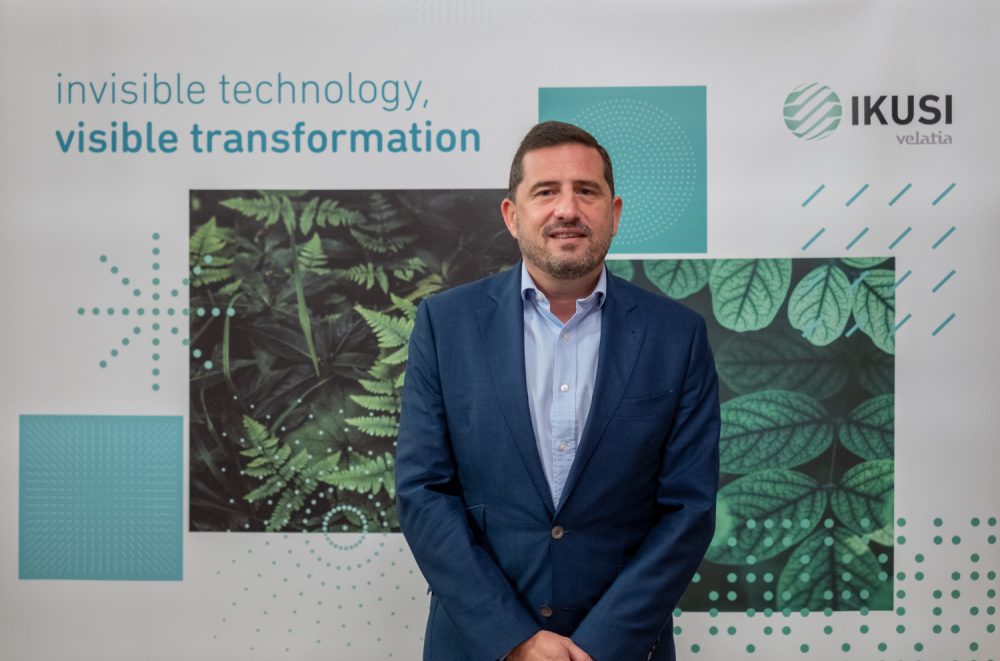
Javier Aguilera, Managing Director of Ikusi Spain
Stating that industry is going through a period of transformation is nothing new. It is inherent to the sector. However, today this evolution has been accelerated by the opportunities offered by digital progress. Modern industry requires more than operational efficiency or production capacity: it needs technology that is intelligently integrated, secure, and aligned with business objectives. The relationship between industry and technology is no longer a strategic option but an essential condition for competing in an increasingly demanding and globalized environment.
At the same time, the technology sector is experiencing a particularly positive moment, marked by the rapid adoption of new capabilities such as artificial intelligence. But this progress does not occur in the abstract: it has a direct impact on industry, especially in critical environments and in sectors where resilience, connectivity, and security are decisive. One of the most significant changes in recent years is the role that technological services play in industrial projects. What was once conceived as a complement or support has now become part of the business strategy.
In the field of critical infrastructures, for example, investment in communications and cybersecurity has grown exponentially. Over the last five years, the weight of the digital component in complex projects has increased fivefold. This means that, from the initial design and planning stages, connectivity and digital security have the same level of critical importance as other key elements of the project.
Today’s industry is connected, automated, and distributed. This makes it more efficient, but also more exposed. Digitalization drives competitiveness, but only when it is built on solid technological foundations.
Cybersecurity: The Challenge Facing Industrial SMEs
In this new context, cybersecurity has become an absolute priority. However, not all companies start from the same position. Spain has an industrial fabric dominated by small and medium-sized enterprises, and here the challenge is particularly complex.
While large organizations usually have resources, specialized teams, and the ability to attract talent, many industrial SMEs still lack the tools, knowledge, and structure needed to adequately protect themselves. This is not only a matter of technology, but also of strategy, culture, and access to specialized capabilities.
This imbalance introduces a clear risk: as industry advances in digitalization, those companies that do not integrate cybersecurity from the outset will become more exposed and lose competitiveness. In this context, collaboration with specialized technology partners becomes a key factor in closing that gap.
Regulatory evolution has also played a decisive role. Frameworks such as NIS2 or DORA have driven a more mature approach to security in industrial environments and critical services. Today, cybersecurity is conceived on the same level as physical security or operational availability.
This regulatory push has had a positive effect: security is no longer added at the end of a project, but rather integrated from its inception. This has raised standards across the sector and helped strengthen the resilience of infrastructures that are essential to society.
Artificial Intelligence: The New Differentiating Factor
But if there is one technology that will clearly make a difference in the coming years, it is artificial intelligence. AI is emerging as a tangible tool to improve processes, optimize operations, anticipate failures, and make better decisions.
The warning is unequivocal: those who fail to join this wave will struggle to compete, even in the short term. In just one or two years, significant gaps are already emerging between organizations that have begun to apply these capabilities and those that have not.
For industry—and especially for SMEs—the key is not to adopt technology as a trend, but to do so with purpose, aligning AI with business objectives and relying on partners who understand both technology and the industrial environment.
At Ikusi, supporting industry along this journey means understanding its challenges, speaking its language, and turning technology into a true value enabler. Because when industry and technology move forward together, the impact goes far beyond efficiency: it translates into competitiveness, sustainability, and the future.